The allure of silence
gallery genesis
Athens
2025
Reflecting the visible, attempting the invisible
Returning with unparalleled pictorial certainty to the liquid element, a thematic and symbolic field that he knows in depth, negotiating the transitory transparent matter of water that enters here kaleidoscopically, reflecting and reimagining silent successive cosmic abbreviations that touch and stimulate the personal and collective geographical and synaesthetic memory of the viewer, Giorgos Saltaferos breaks through the barrier of the visible and the possible, inviting us to enter a magical sphere of successive instantaneous curvatures and prismatic hollow episodes, alternating illusory dioramas and rifts of true existence.
Working in a mirror manner, excavating and recreating a theme through which he has given us mutual emotions in the past, Saltaferos leads us into an immaterial reverse world that is born intuitively from the beginning, reflected with exciting painting skill and sensuous mastery. Cities and buildings, water tanks, ship hulls and traces of faint human presence, spectrums of momentary imprinted color and hues of lived place and time, are mirrored here in swirling circles or transversely woven echoes and re-raised in reverse and sequentially, reassembled through clever optical ins and outs sculptural wrinkles, Cities and buildings, water tanks, ship hulls and traces of faint human presence, spectrums of momentary embossed color and hues of lived place and time, are mirrored here in swirling circles or transversely woven echoes and re-raised in reverse and sequentially, reassembled through brilliant visual sculptural wrinkles, gradually unfolding and triumphantly proclaiming the personal Wunderkammer and possibly an allusive self-portrait of the great painter.
The memory of the mirror
A conversation between the painter Giorgos Saltaferos and art historian Lida Kazantzakis
on the artist’s latest body of work, presented at Gallery Genesis
We met in the courtyard of a historic, renovated café in Chora, on the island of Andros, where the painter Giorgos Saltaferos lives and works. Sheltered from the strong winds, we spoke about his latest work. Saltaferos’ manner of speaking — effortless yet composed — guides us in deciphering key aspects of his art. He reveals how he perceives painting, as well as the deep respect he holds for his models and, by extension, for humanity itself.
— Lida Kazantzakis
L.K.: In studying your works, where the mirror — either natural or constructed — is a central element, I was reminded of Michel Foucault’s lecture “Of Other Spaces”. In it, he speaks of a “kind of mixed, intermediate experience — a kind of mirror” between utopia — “a place without a place,” where I see myself where I am absent — and heterotopia:
“in the sense that it renders the place where I am at the moment I look in the glass both absolutely real, connected with all the surrounding space, and absolutely unreal, since in order to be perceived it has to pass through this virtual point that is over there.”
What does the mirror mean to you?
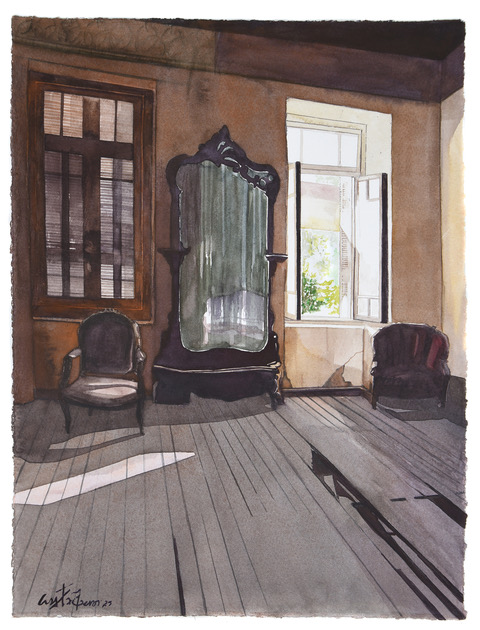
G.S.: For me, the mirror has its own existence. It is the witness of space and of the memory it reflects.
I search within it for narratives of things it has seen — events for which I was not present. So I am seeking its testimony. Testimonies of acts that occurred in a space and vanished, as though they themselves were reflections. Reflection is an illusion I try to preserve at the very moment it vanishes — to render, as in springs or rivers, that play between the imaginary and the real.
L.K.: The mirror has always held a timeless, symbolic and almost magical role — from the ancient myth of Narcissus to the worlds of Alice in Wonderland and The Picture of Dorian Gray. It’s both a tool of self-recognition and of fantastical, idealized perception — of ourselves and of the world around us.
In the history of visual arts, the mirror has been used since Roman times — from the frescoes of Pompeii to van Eyck’s Arnolfini Wedding, Velázquez’s Las Meninas, the countless depictions of artists’ studios, or even Kieffer’s spatial constructs. It has served as both a reflective surface and an illusory extension of space and its subjects.
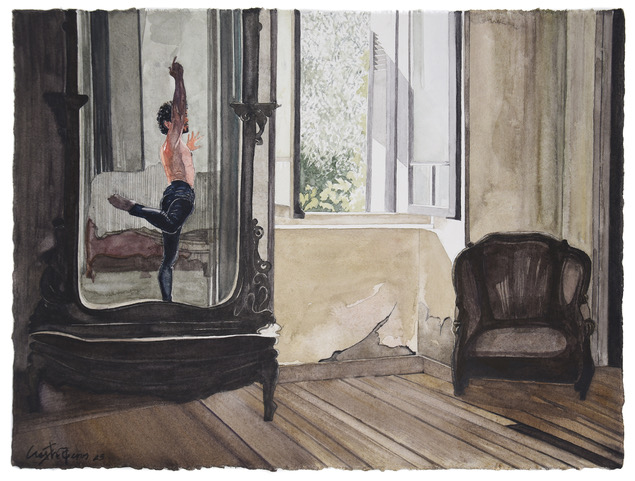
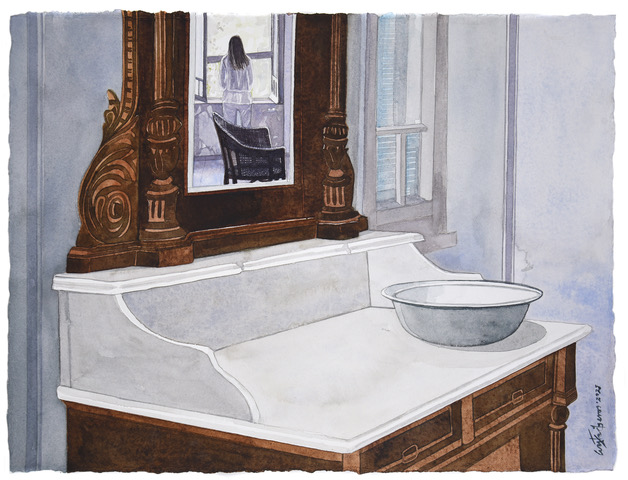
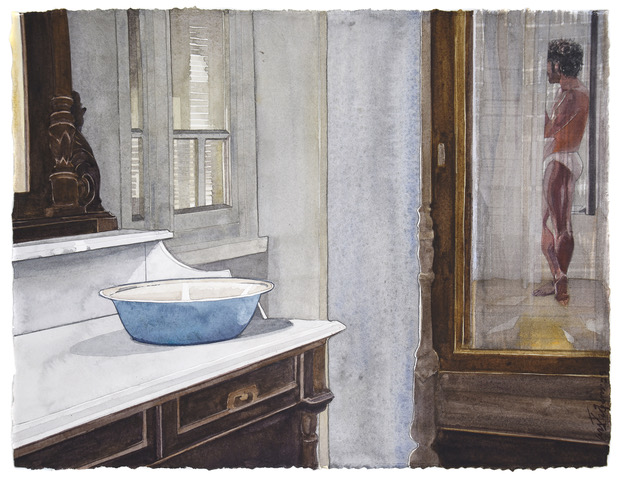
In your recent work, the natural mirror — such as the rivers of Switzerland reflecting urban architecture — is now replaced by a tangible object, at times reflecting the human figure. Would you say this marks a transition toward a more human-centered painting?
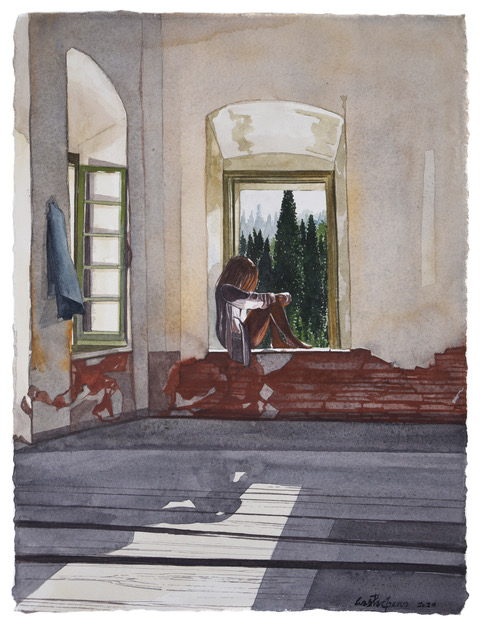
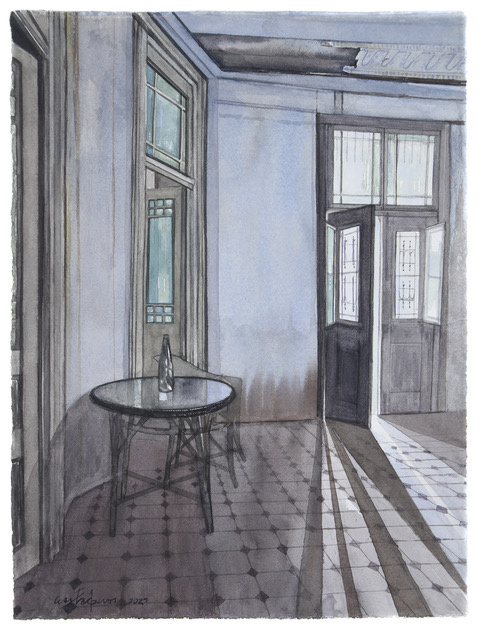
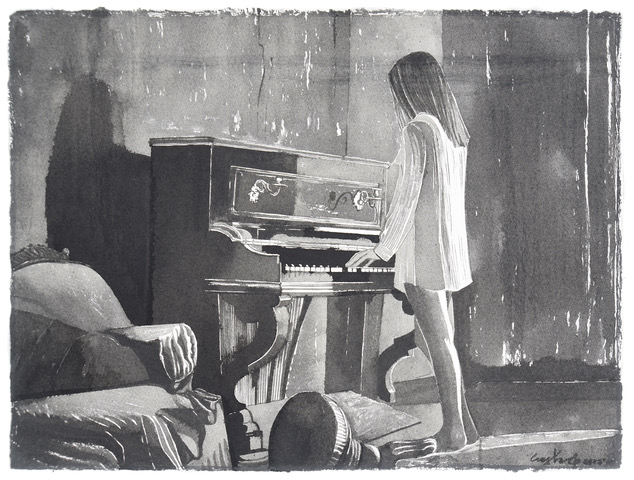
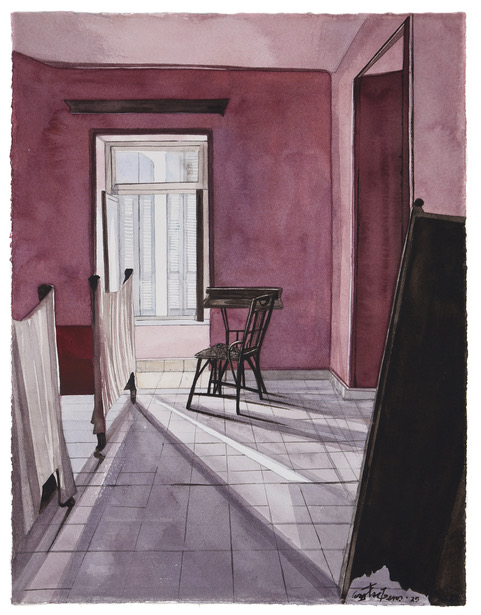
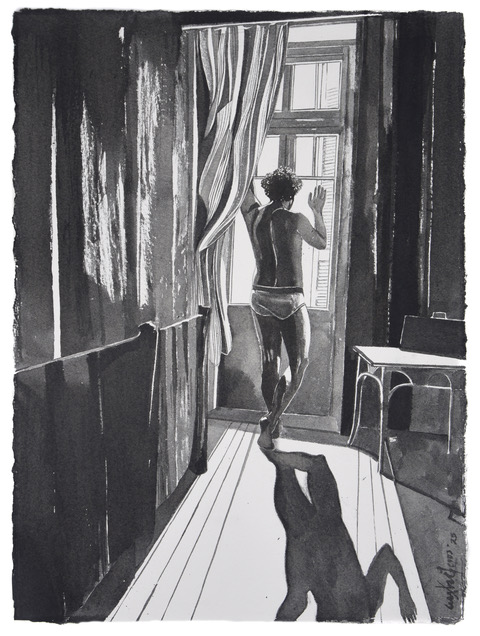
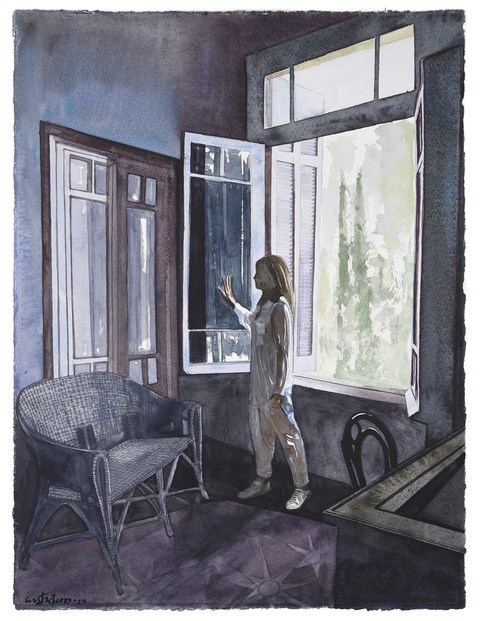
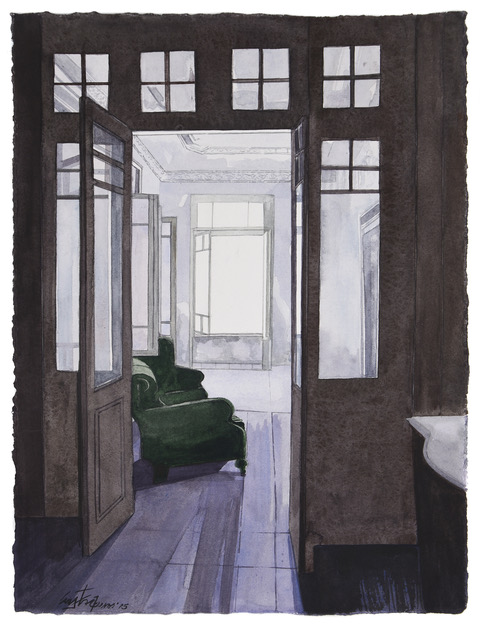
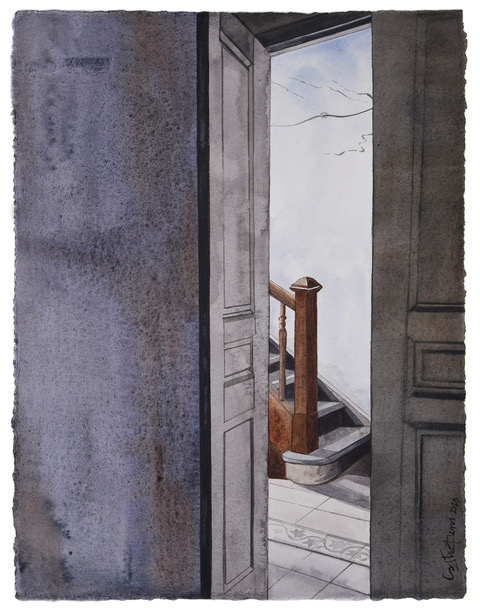
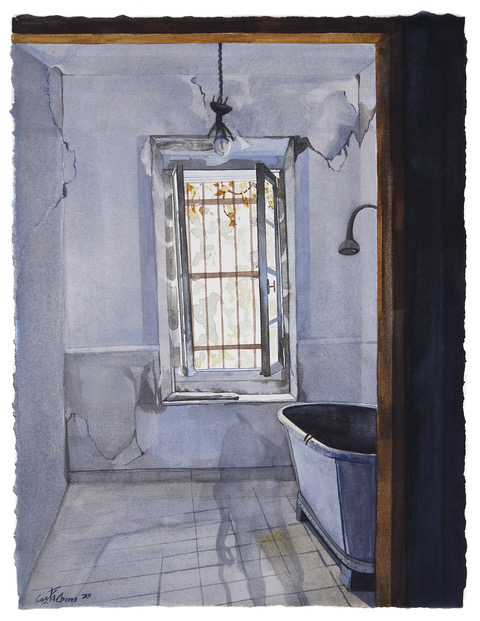
G.S.: All my reflections are narrative in nature. I don’t believe that my latest work is more human-centered — it is rather a continuation of the threshing floors, the stone walls, the medieval buildings that I treat in the same way as I now do the interior spaces and the two figures I depict here.
I’ve always been interested in interiors — especially those that speak from a place of memory, not contemporary or active ones. I try to listen to what they have to say.
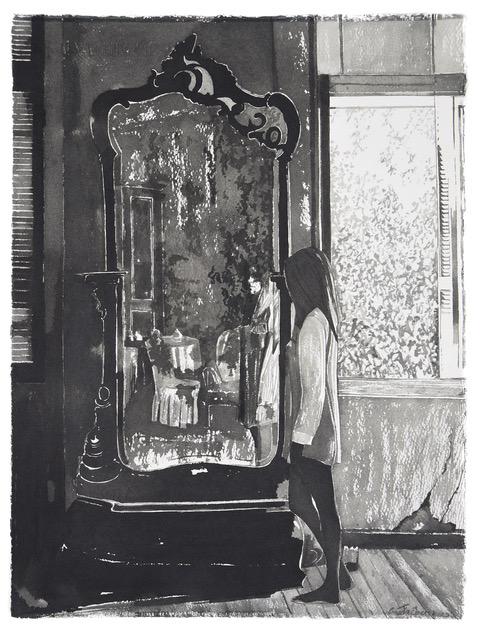
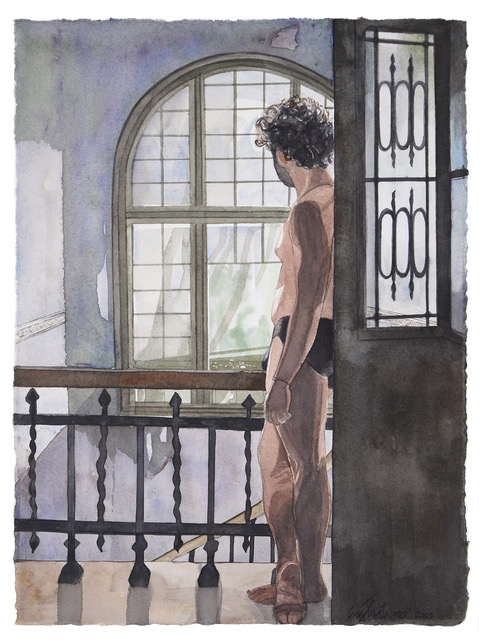
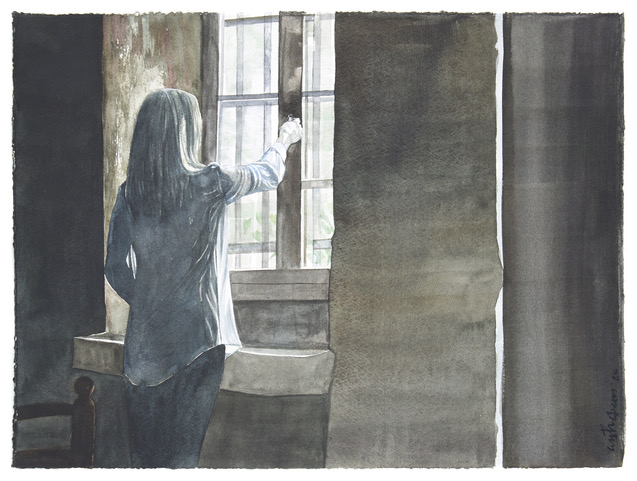
As for the human figures, they are individuals I know, though I don’t portray them with strict fidelity. They may have existed in these spaces — or perhaps never did. What matters is to create a dialogue between the mirror as a witness of spatial memory and the person being reflected in it.
L.K.: The distance you create between the observer and the subject brings to mind a well-known quote from the radical 19th-century poet Arthur Rimbaud: “I is another.” I believe he was referring to the dual nature of the human being — between image and essence — but also to the modern artist’s new consciousness, as both the voice of self and others, and simultaneously, an observer.
Would you like to comment on that in relation to your artistic experience — particularly your recent work?
G.S.: I think this raises the question of how subjective — or how detached and objective — third-party observation really is. But my approach is always experiential.
The difference in this body of work is that my observation is more fragmented.
This fragmentation allows the viewer to construct their own narrative, their own story — one I would be very interested to hear…
L.K.: What struck me most in your recent works is how your brush focuses on the body and its language — rather than on the gaze. I feel this creates an inner world within the figures — one the viewer can observe and contemplate, without forming the usual direct connection with them.
G.S.: What you noticed is true. I don’t want to expose the faces of the people I paint. I feel a reverence before each person’s identity.
I want to give the viewer the freedom to construct their own image. That’s why it’s the body that tells the story — not the face.
The anonymity of the models prompts a different kind of identification in the viewer.
L.K.: In looking at them, I thought that maybe, like Magritte in Not to Be Reproduced — where a man’s reflection shows only his back, while the book beside him is accurately mirrored — you’re suggesting that the original of a human being can’t be replicated…
G.S.: I wasn’t thinking of that Magritte painting — but strangely enough, I had at some point considered making a watercolor of a girl seeing her own back in the mirror.
But what I truly wanted was for her to see herself as I see her — nothing more.
The true face, the real self of a person cannot be reproduced. On the contrary — it is revealed, perhaps, in just a single movement.